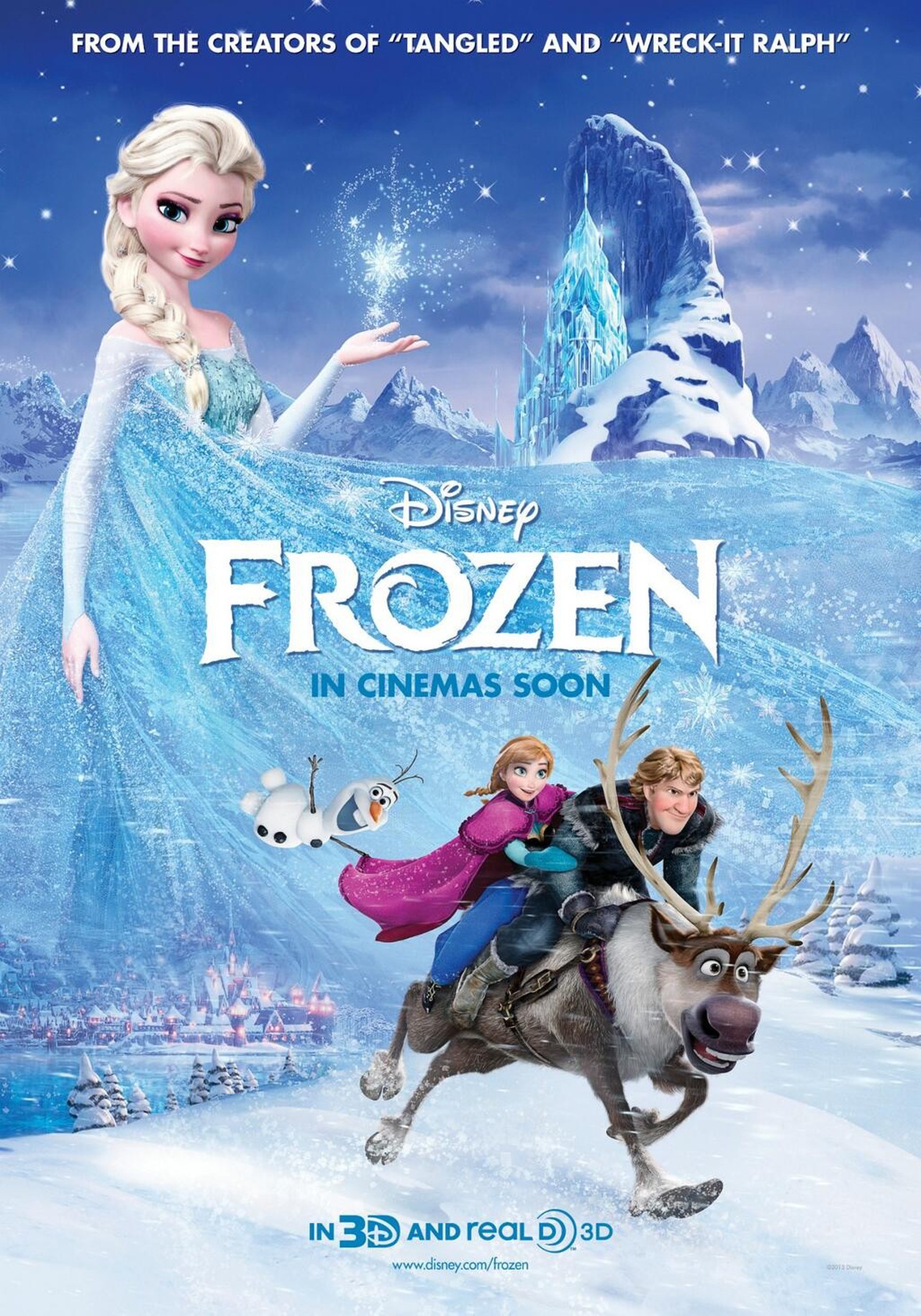
When I went to Disneyland in California in November, there was a lot of hype about Frozen there - without giving away any storyline. So I didn't know anything about it except there were two princess sisters, one of whom had the power of ice. And that, was probably a good thing.
So our family outing included a movie, and people had who had seen Frozen had good things to say. I purposely didn't read any reviews, and wanted to see if I would be pleasantly surprised.
In fact, I was more than pleasantly surprised. I was amazed, and thrilled that this movie shows that Disney can move away from the classic princess storyline and give this amazing tale that appeals to children and adults.
I went to read about Frozen after I watched it, and found that it was co-written and co-directed by Jennifer Lee who also worked on Wreck-it Ralph. I am not sure if that is why this movie is more feminine in its ideas and dialogue but it really shows and it is a REALLY good change.
Essentially the story is about two sister princesses - Elsa, the elder, has powers to control and create ice, and the younger, Anna is injured by Elsa in an accident when they were playing with her powers of ice. The King and Queen rush to see the mountain trolls whom by magical means erase the memory from Anna's memory and cure the cold injury and the King and Queen decide to deal with the problem by hiding from the world and trying to get Elsa to control and conceal her powers. A few years later, the King and Queen die in a sailing accident, and the two girls whom were very close as children are no longer as close, as Elsa hides on her own in her room in isolation to avoid hurting anyone else, much to Anna's dismay, as she attempts to engage her elder sister in games and play.
The day of coronation comes, and as feared, Elsa's powers are revealed leading her kingdom's followers and neighbouring kingdoms to fear her and she runs away. The incident is precipitated by the sheltered Anna declaring her love to a neighbouring prince and they seek marriage after knowing each other less than a day, which Elsa tells her sister is foolish. Elsa heads to the far north snowy mountains, not realising she has plunged her kingdom into an eternal winter.
Anna now understands why her sister has been so isolated and with an ice farmer, Kristoff, she goes to find her sister, leaving her fiance, Prince Hans, to run the kingdom, which he does rather admirably in her absence. They meet a magical snowman, Olaf, who was created from Elsa's magic, a throwback to their younger days when they were the best of friends, building snowmen together.
As she confronts her sister and urges her to return with her, Elsa's powers explode in an emotional outburst, and Anna is struck in the chest with an ice bolt, which Elsa does not realise she has done. Kristoff takes her to see the mountain trolls, and they tell her that her heart is now frozen and without an act of true love, it cannot be melted.
Meanwhile, Prince Hans sets off to find Anna and Queen Elsa and they manage to subdue Elsa and return her to the kingdom with her hands enchained to attempt to contain her.
Anna and Kristoff think this means that she needs Prince Hans to kiss her, as he is her true love. But it is evident that Kristoff also loves Anna, and when Anna returns to kiss Hans, he reveals that he is only after the kingdom as being the 13th son, he would have never had a kingdom to rule. His plan was to leave Anna to die a frozen death, and kill Queen Elsa for treason against her people.
Kristoff realises that he loves Anna and returns to try to save her. Anna is looking for Kristoff, realising she loves him and he loves her. Elsa escapes and is escaping along the ice and Hans is out hunting Elsa to kill her. Anna suddenly sees Kristoff and they try to reach each other, and then Anna turns and sees Hans about to kill Elsa who is absorbed in her fear and grief from the powers she cannot control. She runs to her sister, and shields her sister with her body as she is turned to a glittering statue of ice, and Hans' sword breaks as it strikes her statue. Elsa and Kristoff are distraught as they realise what has happened.
That is the moment I realised what a tremendous film this was. Because, that moment, I realised that for the first time, neither a prince nor a male hero, had saved the day. Anna, when she went to sacrifice herself for her sister, in an act of pure love, melted her frozen heart.
And they lived happily ever after.
I doubt that children will realise this step from Disney. I am truly impressed that finally, Disney is moving away from the females need men to save the day - and that females on their own can be heroines, in their own right. If the feminists of the world are not celebrating this movie for not only flawlessly incorporating this into mainstream animation and a popular movie, then they really need their heads screwed on. As a parent with a daughter, she enjoyed this film and begged to see it agian, and much to my relief, there was no mention of her needing a prince to save her. I hope that she will grow to be a young lady who believes in herself, not one who grows up believing she needs to find a man (to marry) to solve her problems, as I think THAT is the message that I want her to grow up with. And to value friendship, and ask for help when needed (after trying by yourself), no matter whether the friend be male, female, animal or inanimate.
I didn't watch this in 3D and I am not sure it needed to be. It still plays very well in 2D and the ice is so beautiful and believable in all its shapes and forms, including the amazing castle on the mountain that Elsa created as her fortress of solitude.
The music has a more Broadway feel about it than previous Disney films - especially the song "Love is an Open Door". I like musicals, and so does my daughter and husband, so everyone was running around the house singing "Do you want to build a snowman?" right after we watched the movie. The words are engaging and the tunes catchy, and though at first I thought the bursts into song were too frequent, as the movie progressed I hardly noticed them amongst the dialogue.
9/10 in my opinion!
Showing posts with label Movie review. Show all posts
Sunday, January 12, 2014
Saturday, July 6, 2013
World War Z - how I liked the movie AND the book, and how it COULD happen
*** WARNING: SPOILERS! ***
| Sydney, Australia |
| Berlin, Germany |
| Rome, Italy |
| Barcelona, Spain |
| Paris, France |
| Mexico City, Mexico |
| New York, USA |
| London, UK |
| Rio, Brazil |
| Moscow, Soviet Union |
In the movie, the human race is infected by a saliva/blood borne virus that kills the host and animates it into a zombie. United Nations representative, Gerry Lane, has been asked by the government to try to track down the origin of the infection, and thus help find a vaccine to save the remaining population, and the rest of it plays out like Dawn of the Dead or Resident Evil or any of those other zombie movies with your fill of zombie action and scary moments. Ultimately the solution lies in the zombies only attacking healthy people, so Gerry innoculates himself with a deadly virus and finds that the zombies largely ignore him. There are some aspects from the book in it, but really, it's quite dissimilar.
There are some moments in the movie which I thought were great insights into human nature. Jerusalem, Israel, was free from infection and when Gerry goes to investigate, they had early warning and their walls which were already high, were built even higher. The whole city was built to repel attacks and so it survived quite well. They also let in all refugees and Gerry found this a surprise, but they said "For every person we save, it's one less zombie to fight." A really great sentiment, in my opinion. Very different from the other perspective of saving a few people and then shutting out the rest so that they don't possibly contaminate the healthy population.
It's not a wonderful movie, but it's not bad for a zombie movie. Entertaining, eye candy (in the form of Brad Pitt) and a bit of token science thrown in for an attempt at reality.
The book on the other hand (by Max Brooks), is a collection of war stories, collected 10 years after the Zombie war. The interviewer is a United Nations agent, and the book is a wonderful insight into humanity in different cultures, as well as the different political methods which are unique to each country. Zombies in the book walk, and don't run, and are relentless in their assault (unlike the movie where they chase you down). They are also mindless in that they can't open doors, undo seatbelts - they are just automatons without reasoning, logic or learning who just seek and bite. Zombies freeze in the cold, so many people went to the snow, but they reanimate when the snows melt. They also are found in the ocean, walking along the ocean floor and can pop up on beaches after walking for long distances. It is the brain which has to be destroyed for the zombie to stop, for even dismemebered, they will still come at a victim.
One recount of an organ transplant causing a zombie to rise was interesting - no doubt because of the organ trafficking that comes from China. Another account by the someone in Tibet smuggling people out of China and how families would take their infected out seeking a cure was also quite interesting - it showed how the infection broke out in other places. Another account of the Americans using chemical warfare in attempt to kill the healthy AND the undead merely provided more hosts for zombies - disastrous! The Jerusalem story was very similar to the movie (obviously in a culture that had been constantly attacked for genocide multiple times), and in India, a place where people would make a pilgrimage to die became a zombie hot zone because people kept going there to die and then becoming zombies. Another interesting facet of human behaviour was seen in a Palestinian refugee who was heading to Jerusalem, being dragged their by his father, thought that the zombie infection was some kind of cover-up or ruse, and even when inside the safety of Jerusalem, when he saw Israeli's fighting other Israeli's, he thought that it was a civil war and actually rejoiced for a moment before he saw the zombies for himself.
I really enjoyed the book. I never thought war recounts could be interesting, but in this war story it was fighting an enemy that was relentless and unstoppable, with no agenda except human decimation. It also dealt with the aftermath and rebuilding of civilisation. How useful professions such health, farming, construction, engineering became the cornerstones for rebuilding society - and other professions which we value so highly in the current era such as banking, finance, and information technology suddenly became redundant. Even the psychological aspect was dealt with in a really interesting manner - people were dying from "giving up" or "lack of hope" and someone went out and made movies of stories of hope which reduced the number of those sorts of deaths.
But the scary thing is that this COULD become possible - if mother nature decided to make it that way. There are a number of mind controlling mechanisms between other species in nature that sound quite terrifying if they occurred in vertebrates or humans (information taken from io9).
The wasp Hymenoepimecis argyraphaga preys on the spider Plesiometa argyra in an Alien-like manner. The female wasp stings the spider to paralyse it then lays an egg in its abdomen. When the larva hatches, it feeds upon its host and the spider continues to go about its business as if nothing is wrong. After a few weeks, the larva releases a chemical to build a web totally different from its normal web - basically just threads bonded together and the spider sits there waiting to die. When the larva emerges, it kills its host with poison and sucks it dry, and then makes a cocoon which hangs from the web and the wasp will eventually emerge. That the parasite can emit chemicals that can control the host's mind... creepy!
Destroying the reproductive capabilities of its host is another nasty way for parasites to work. The female larvae of the barnacle Sacculina carcini seek out crabs as their host. They attach to the underside of her shell, creating a bulge which eventually becomes a knot. Tendrils are then spread inside the host to draw nutrients. A male Sacculina comes along and implants inside the female barnacle, and they continually reproduce. The crab is now infertile and its behaviour is also modified by them - it stops growing and moulting and even cares for the barnacles' eggs. If the crab infected was a male, the barnacle sterilises it and then causes changes in the crab to make it more like a female crab's body by widening and flattening the abdomen. It forces hormone changes in the crab so that it acts more like a female, and also takes care of the barnacle's eggs.
The article details a great number of other interesting parasitic mind controlling infections - if you're into that kind of thing, I recommend reading it.
So my mind has been turning over these things since I watched the movie and read the book. What if this happened? What if I was a survivor? What are the REALLY important things in life? How can I be make my life a more productive and useful one? I wonder if everyone who read the book ended up thinking these things - maybe not - but it is a really good example of how decadent and self indulgent our society has become, and maybe a good war would bring us back to the values which truly define the human spirit.
Monday, December 31, 2012
Les Miserables - The Movie - SPOILER ALERT
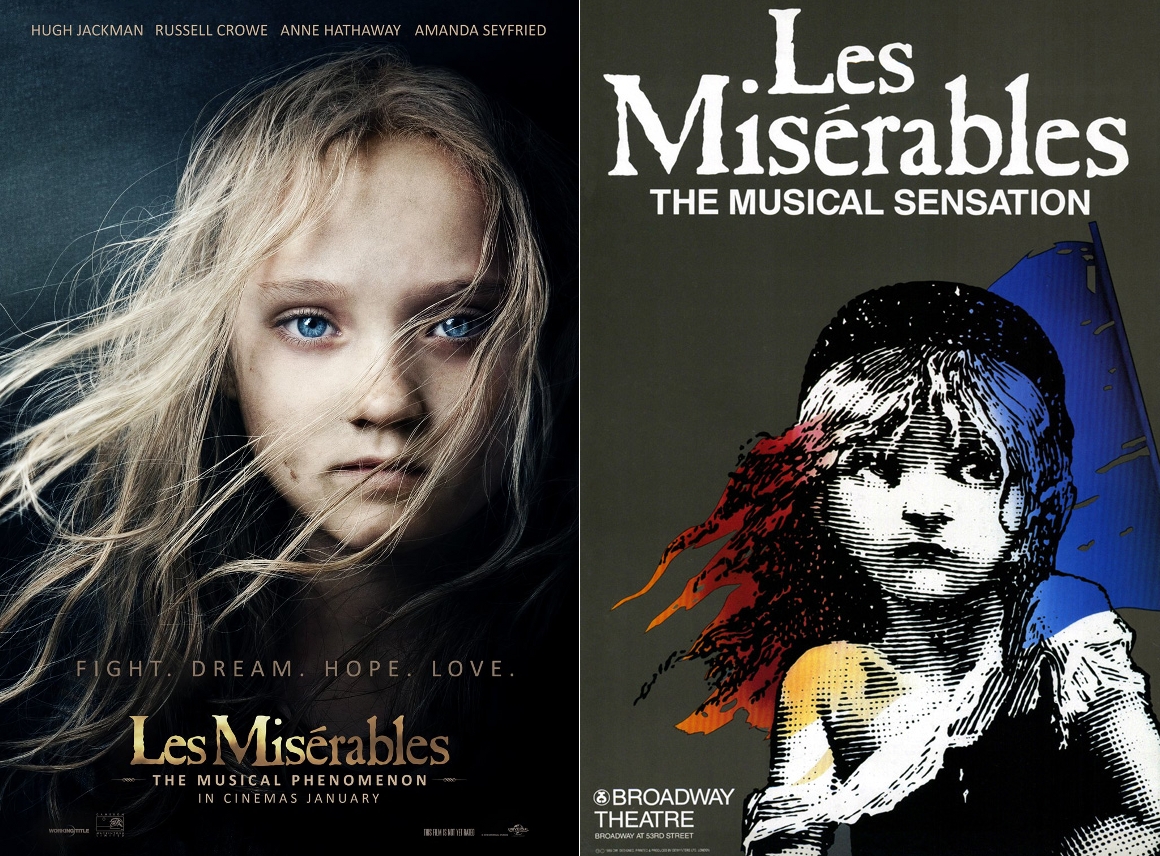
Ever since I saw the trailer for Les Miserables with its star studded cast, and gorgeous sets, I wanted to see it. Like many, I have seen the musical, I own the soundtrack, the songs and the story are familiar to me.
However, since its release there have been a number of scathing reviews from movie critics:
But there have been promising reviews as well:
I went in, expecting to be disappointed. I heard Russell Crowe's singing left something to be desired. I heard people complaining it was all singing (though really, what did they expect, it's a full movie adaptation of the MUSICAL).
The first half hour, I was a little disappointed in the singing. The cinematography however, was fantastic. There are things that the stage cannot show you, that a movie can. With a movie, you can have an impressive set, you can alter the visuals by showing the actors at various stages in their lives. The image of the convicts hauling in the massive boat as they sing "Look Down" show the desperation of their position. Hugh Jackman as Jean Valjean was frighteningly gaunt looking as a prisoner and on parole, but cleaning up nicely as he skipped parole and went on to become the mayor of a small French town.
The sewing room scene "At the End of the Day" was done superbly, and showed Anne Hathaway's character, Fontine, falling from grace as she desperately turned to prostitution and destitution as she tried to scrape up coin to pay for her daughter's care by an innkeeper and his wife.
Two actors in the musical surprised me with how fantastic their vocals were. Samantha Barks who plays the grown up Eponine, did a heartrending rendition of "I dream a dream" in the miserable pouring rain, which emphasised the desperation of her one sided love situation. Eddie Redmayne did an amazing job portraying Marius, with superb clear notes and bringing a depth to Marius that I never seemed to view him with when I watched the musical.
One particular scene in the movie is also much more moving and stirring than in the musical - when they are singing "Red and Black" within the cafe, the night before the revolution. The song with those scenes really make the words stand out, and made me realise how brilliant the lyrics to the songs really are.
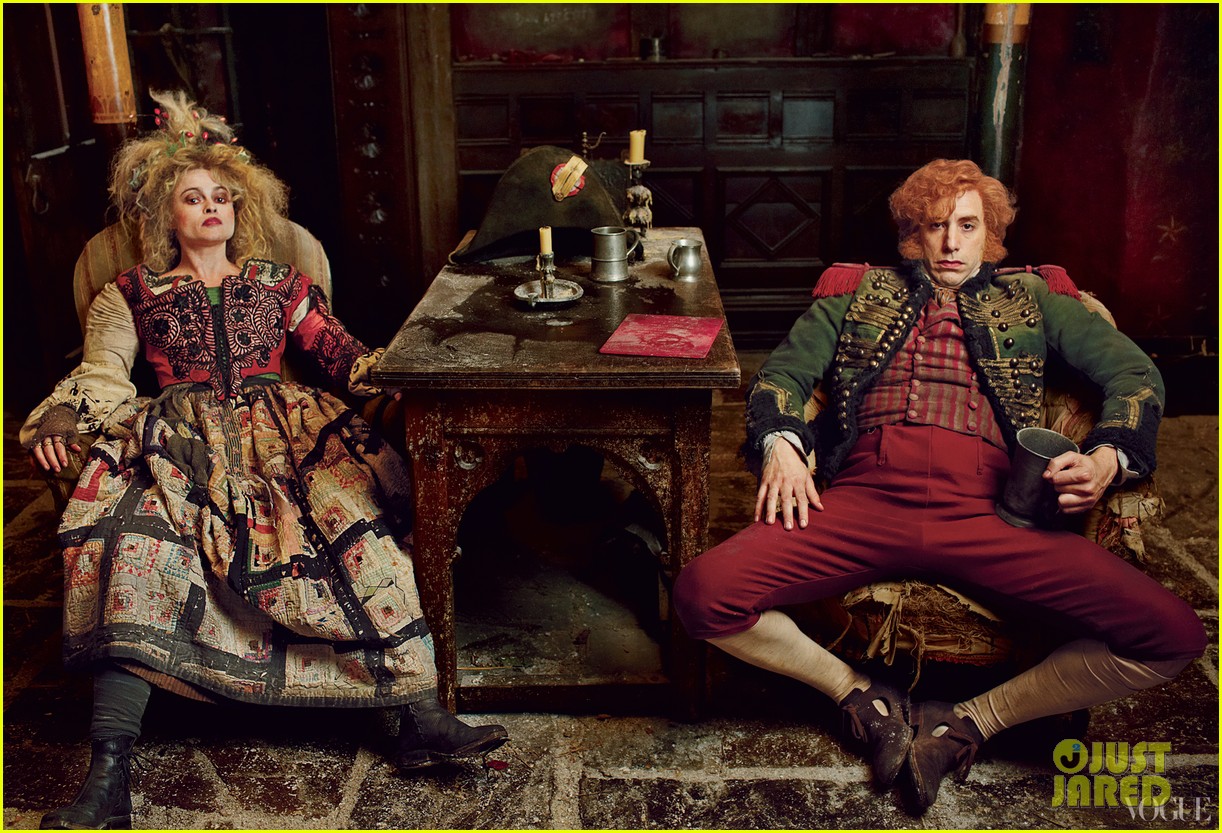
The comic relief supplied by the Innkeeper and his wife, played by Sacha Baron Cohen (of Borat fame) and Helena Bonham Carter was superb, just as I remember it in the musical.
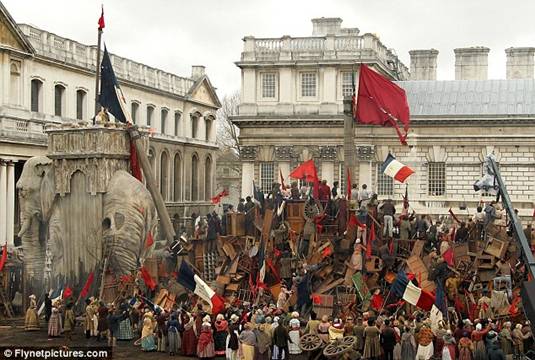
This scene is particularly cool to me, because I actually SAW this set when I was in England in April 2012. I was in Greenwich and we saw the elephant and a market like scene and wondered what it was. Now we know!
The great difference between a musical and a movie, especially for a production such as this, is that a musical is about the music with a minor emphasis on acting, whereas in the movie, it's the opposite. The director did make the actors sing all their own songs and added the accompanying music afterwards, which makes it still a very good musical production as they are actually singing and not lip syncing. Watching the movie is so much more emotional - there were no tears shed during the musical from the emotion of the story, maybe wet eyes from the beauty of the music. But in the movie, I cried... a LOT. In the musical, I found the interaction between Jean Valjean and Javert to be the most interesting interaction, and the whole love triangle between Marius, Colette and Eponine not as engaging, but the songs were entrancing. In the movie, I feel so much more involved, so much more empathetic to the love of Marius and Colette, and also of Eponine.
However, since its release there have been a number of scathing reviews from movie critics:
...I didn't like it. Why?...The musical is "sung-through," as the theater people say, crammed with nattering recitative, i.e., dialogue that is sung, either in earnest or on the fly. The camera bobs and weaves like a drunk, frantically. So you have hammering close-ups, combined with woozy insecurity each time more than two people are in the frame. Twenty minutes into the retelling of fugitive Valjean, his monomaniacal pursuer Javert, the torch singers Fantine and Eponine and the rest, I wanted somebody to just nail the damn camera to the ground. ...I'll just dream a dream of musicals gone by, directed by people who could create a rhythm and establish a style that complemented the story, the performers and everything in between.- 1.5 out of 4 stars, Michael Phillips, Chicago Tribune
A gallery of stellar performers wages a Sisyphean battle against musical diarrhea and a laboriously repetitive visual approach in the big-screen version of the stage sensation Les Miserables. As the enduring success of this property has shown, there are large, emotionally susceptible segments of the population ready to swallow this sort of thing, but that doesn't mean it's good......but there is little else that is inventive or surprising about the performances. Still, there is widespread energy, passion and commitment to the cause, which for some might be all that is required.
But there have been promising reviews as well:
Impeccably mounted but occasionally bombastic, Les Misérables largely succeeds thanks to bravura performances from its distinguished cast.- 71%, Rotten Tomatoes
So what did I think?A tender, transcendent and powerfully stirring adaptation of the longest-running stage musical is both old-fashioned and daring, and an ideal holiday season offering......Les Misérables is sweeping, as would be expected given the scope of the hugely popular stage musical from which it is adapted. But it's also wonderfully intimate, thanks to Tom Hooper's deft direction......Hooper (The King's Speech) was a perfect match for the material, making exquisite use of a much bigger stage and impeccable production design for a wonderfully epic effect, juxtaposed with stirring tight close-ups...For a 2½-hour movie, it's surprisingly well-paced and consistently enthralling. The look of the film is gorgeous, but Les Mis is a success primarily because of its superlative musical performances.- 3.5 out of 4 stars, Claudia Puig, USA Today
I went in, expecting to be disappointed. I heard Russell Crowe's singing left something to be desired. I heard people complaining it was all singing (though really, what did they expect, it's a full movie adaptation of the MUSICAL).
The first half hour, I was a little disappointed in the singing. The cinematography however, was fantastic. There are things that the stage cannot show you, that a movie can. With a movie, you can have an impressive set, you can alter the visuals by showing the actors at various stages in their lives. The image of the convicts hauling in the massive boat as they sing "Look Down" show the desperation of their position. Hugh Jackman as Jean Valjean was frighteningly gaunt looking as a prisoner and on parole, but cleaning up nicely as he skipped parole and went on to become the mayor of a small French town.
The sewing room scene "At the End of the Day" was done superbly, and showed Anne Hathaway's character, Fontine, falling from grace as she desperately turned to prostitution and destitution as she tried to scrape up coin to pay for her daughter's care by an innkeeper and his wife.
Russell Crowe's Javert is acted very well, though his singing wasn't brilliant, but his acting of Javert I thought was good, and he was well suited to the role. The torture in his soul, trying to come to terms with a criminal who seemed to be acting like a good guy, despite his belief that criminals will always be criminals was believable. When his life was spared by the criminal Jean Valjean, who merely accepted that Javert was "doing his job" and held him no malice, was a puzzlement, and when faced again with the ability to take Jean Valjean in custody, but having to let him pass because Javert knew it would be wrong to take down someone who had done the right thing... was too much for him and it showed. I feel bad for Russell Crowe, for he has been touted as being the let down of the movie, whereas I didn't feel that was the case at all.
Two actors in the musical surprised me with how fantastic their vocals were. Samantha Barks who plays the grown up Eponine, did a heartrending rendition of "I dream a dream" in the miserable pouring rain, which emphasised the desperation of her one sided love situation. Eddie Redmayne did an amazing job portraying Marius, with superb clear notes and bringing a depth to Marius that I never seemed to view him with when I watched the musical.
One particular scene in the movie is also much more moving and stirring than in the musical - when they are singing "Red and Black" within the cafe, the night before the revolution. The song with those scenes really make the words stand out, and made me realise how brilliant the lyrics to the songs really are.
The comic relief supplied by the Innkeeper and his wife, played by Sacha Baron Cohen (of Borat fame) and Helena Bonham Carter was superb, just as I remember it in the musical.
This scene is particularly cool to me, because I actually SAW this set when I was in England in April 2012. I was in Greenwich and we saw the elephant and a market like scene and wondered what it was. Now we know!
The great difference between a musical and a movie, especially for a production such as this, is that a musical is about the music with a minor emphasis on acting, whereas in the movie, it's the opposite. The director did make the actors sing all their own songs and added the accompanying music afterwards, which makes it still a very good musical production as they are actually singing and not lip syncing. Watching the movie is so much more emotional - there were no tears shed during the musical from the emotion of the story, maybe wet eyes from the beauty of the music. But in the movie, I cried... a LOT. In the musical, I found the interaction between Jean Valjean and Javert to be the most interesting interaction, and the whole love triangle between Marius, Colette and Eponine not as engaging, but the songs were entrancing. In the movie, I feel so much more involved, so much more empathetic to the love of Marius and Colette, and also of Eponine.
One thing remains the same, in both the musical and the movie, and to me it is the superfluousness of Colette. I feel like she plays no hero, no role in the whole show, and is merely a little flower figurehead. But if I think on it more carefully, she is the goodness in the film. Because of her, Fontine has to fall from grace. And because of her, Jean is moved to love, and to rescue Marius for her future. She may not be a heroine but she merely represents an angel of goodness, a beacon of light for those other characters who have to deal with a struggle in the story.
If you are a fan of the musical, I would recommend watching it. If you are FANATACAL about the music, you will probably be disappointed. But if you want to see the emotion behind the story that is usually overshadowed by the beauty of the music, then this movie, will open your eyes to that and I am sure, like I, you will love it as I did. Bring some tissues. I used about 3.
Wednesday, December 26, 2012
The Hobbit - WARNING SPOILERS!
To tell you the truth, I wanted to see the Hobbbit, but I was not DYING to see the Hobbit. As part of Peter Jackson's Lord of the Rings movie series, it was going to be well done, I had no doubt about that.
It's just that - and this is blasphemy to all Tolkein fans, and even to someone like myself who claims to like Fantasy - I have never been a fan of the the Tolkein Series.
Perhaps its because I read it when I was 11 or 12. Maybe too young to appreciate the story. Perhaps the language was too advanced for me. I read David Eddings at that same age and thoroughly enjoyed it.
So as part of the Boxing Day tradition, my sister and her husband, my hubby and I, my dad and my aunt, all went to watch a movie - and The Hobbit was released in Australia on Boxing Day.
To paraphrase Galadriel's words:
"And then something happened that the Ring I did not expect."
I not only enjoyed the Hobbit. I LOVED it. It was better than I had expected. It was more exciting that I had hoped. It moved me in so many parts - and it reminded me, which I did already know, but had forgotten, why Tolkein was hailed as the creator of modern Fantasy to this day.
If you look at World of Warcraft, and many other fantasy stories, it's as if what was written by Tolkein has become the truth, or rather the lore upon which many other fantasy stories are based. But I will write about that elsewhere. I am going to talk about the movie.
*** WARNING SPOILERS! ***
It starts with older Bilbo (Lord of the Rings age) starting his tale "There and Back again". There is an appearance by Frodo and it launches into how Bilbo landed into his grand adventure.
The background of Erebor, one of the great Dwarven cities, and how it was taken by a dragon which drove out the dwarves, leaving them homeless and wandering the lands, starts us off. The tale of attempts to reclaim Moria against a white orc, Azog, who slew Thror, of the line of Durin, was told, and how Thorin, son of Thror defeated him in battle by cutting off his hand (hmm sounds like Isildur and Sauron).
Gandalf, who knew Bilbo from a young age, dragged Bilbo into a quest by the Dwarves to reclaim Erebor. They descended unwanted into his house, disturbing his happy life of home, comfort and good food, and talked of their plans to retake Erebor, for there were signs to say that it was time, and Gandalf has a map that will lead them to Erebor (but needs some help translating it). Bilbo reluctantly goes, and they encounter many things during their quest.
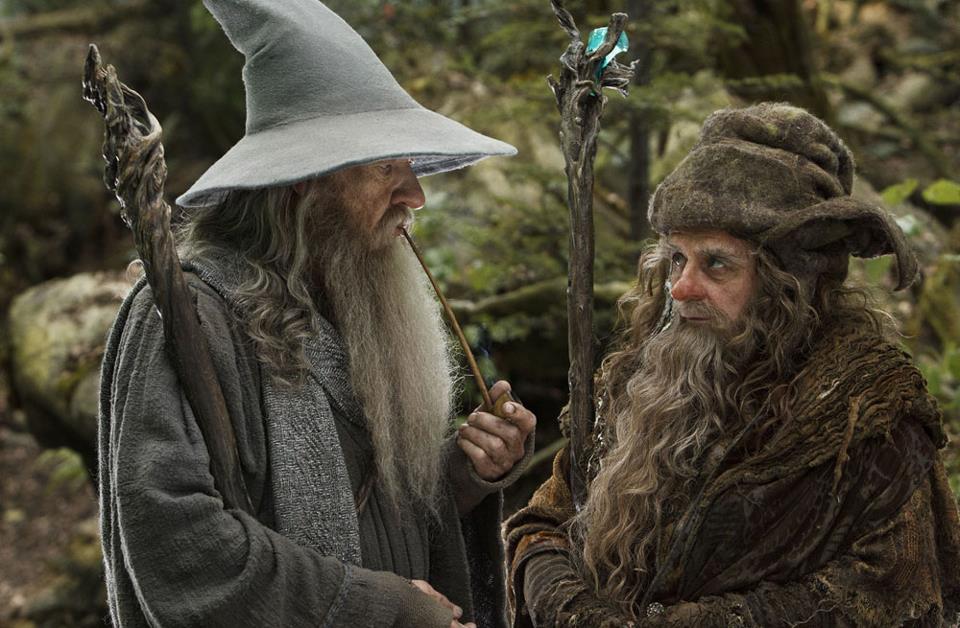
The encounter with the trolls was amusing. After the trolls captured them all and were about to eat them, Bilbo stalled them long enough for Gandalf to arrive and the sun fell upon them and turned them to stone. Raiding the Troll's stash, they find some Elven weapons, with glorious names such as Orcrist (Goblin Cleaver) and Glamdring (Foe-hammer), which are taken up by Thorin and Gandalf. Then, they are beseiged by orcs and wargs, who are minions of Azog, and they manage to escape after encountering the Brown Wizard, Radagast, who is an odd Wizard, who associates with animals and the like. Radagast tells them of a necromancer who is weaving evil things in an abandoned fortress, and gives Gandalf a Morgul blade, as proof of his story.
The adventurers escape into a cave as the orc descend upon them, but an Elvish patrol appears and slaughters the orc company. The dwarf company head down the cave/crevice and come to Rivendell, much to Thorin's disgust (he hates Elves, for their reluctance to help the Dwarves in their times of need). Elrond assists them by reading the map, telling them they must open the secret entrance to Erebor at a certain time - and that time is fast approaching. The Dwarves decide they must go, and go soon, if they wish to keep going with this mission.
Gandalf is summoned to see Galadriel and Saruman with Elrond, who are anxious to learn the necessity or the wisdom in this quest. When Gandalf speaks of the necromancer, Saruman dismisses him, but Galadriel speaks privately to Gandalf saying it is of great importance.
As they make their way up the mountains without Gandalf, the orcs again start their pursuit. However, the dwarves have more pressing problems - rock giants fighting in the mountains as they traverse it, leading to some CGI fun and action/tension. They escape into a cave, and Thorin proclaims loudly how useless Bilbo is. Bilbo decides to sneak out and go home while the others sleep, but then they are captured by The Great Goblin, a huge fat diseased looking Goblin who proclaims he is going to send Thorin's head to Azog. Bilbo manages to escape them, but falls and encounters Gollum, who drops the ring and it is found by Bilbo.
The riddle game is played out quite well, and Gollum's expressions are classic. Bilbo manages to escape Gollum (by wearing the ring) and spares Gollum's life when given the opportunity to take it, and rejoins the Dwarf company who are liberated by Gandalf and an action packed pursuit through the caves of the Misty Mountains occurs, which takes up a lot of time.
Gandalf realises when they emerge from the mountains that Bilbo is missing, and Thorin states that the useless hobbit has run off home. Bilbo hears this and removes the ring and when asked why he returned, he said that yes, he did want to go to his home, but the Dwarves have no home to go to, and he wishes to help them get their home back. Thorin is still dismissive but the other Dwarves warm to him, and Gandalf looks pleased.
However, Azog and his orcs catch up to them and taunts Thorin, leading the angered Dwarf to fight Azog. Azog injures Thorin, and as they are about to take his head, Bilbo leaps to Thorin's aid, his courage inspiring everyone else who to join in the battle. As hope seems lost, Gandalf's friends, the large eagles, come and fight against the orcs, and rescue the besieged Dwarves, carrying the company to safety.
Thorin's heart is turned around by Bilbo's courage, and that moment brought a big smile to my face. Bilbo, so small, an ordinary, quiet loving Hobbit, shows how heroic even the smallest can be with his courage and bravery. It was inspiring.
And that was the end of the movie. Sigh, another year to wait for the sequel! It was a magnificent movie - a lot of action was added in which dragged the movie out, but I thought that it helped draw in a larger audience. The CGI was excellent, except the Wargs who still looked a little fake and robotic to me. The action was a little unbelievable, with nobody getting hurt but hundreds of goblins/orcs being injured. Another thing interesting was that some Dwarves could be hideous looking whilst others looked almost human - as in no enhanced brow ridges, noses or huge bushy beards. They were almost handsome. Thorin was, I hate to admit it, attractive, as well as Kili and his brother Fili (who are nephews of Thorin, so maybe good looks go in that lineage).
So what are you waiting for? Go watch it already!!!
Subscribe to:
Posts (Atom)